
Scranton Quality Roofing handles gutter installation in Scranton, PA, serving surrounding cities including Dunmore, Moosic, Old Forge, Throop and Dickson City. After more than 20 years of roofing work, we treat gutters as part of the roof system, sized to the roof area they drain and pitched to the downspouts that carry the water away.
Too many gutter jobs are an afterthought, a standard size hung at whatever height the old ones were. That approach leads to overflowing corners in heavy rain, water running behind the gutter, and rotted fascia and roof edges. We measure first, then size, pitch and hang the system so water from the roof actually ends up in the gutter and leaves the house through the downspouts.
We install seamless aluminum gutters formed on site for each run, along with downspouts, extensions and gutter guards where they make sense. When gutters go on with a new roof, the drip edge and gutter line are set together, which is the best way to keep water out of the fascia.
Residential Gutter Installation
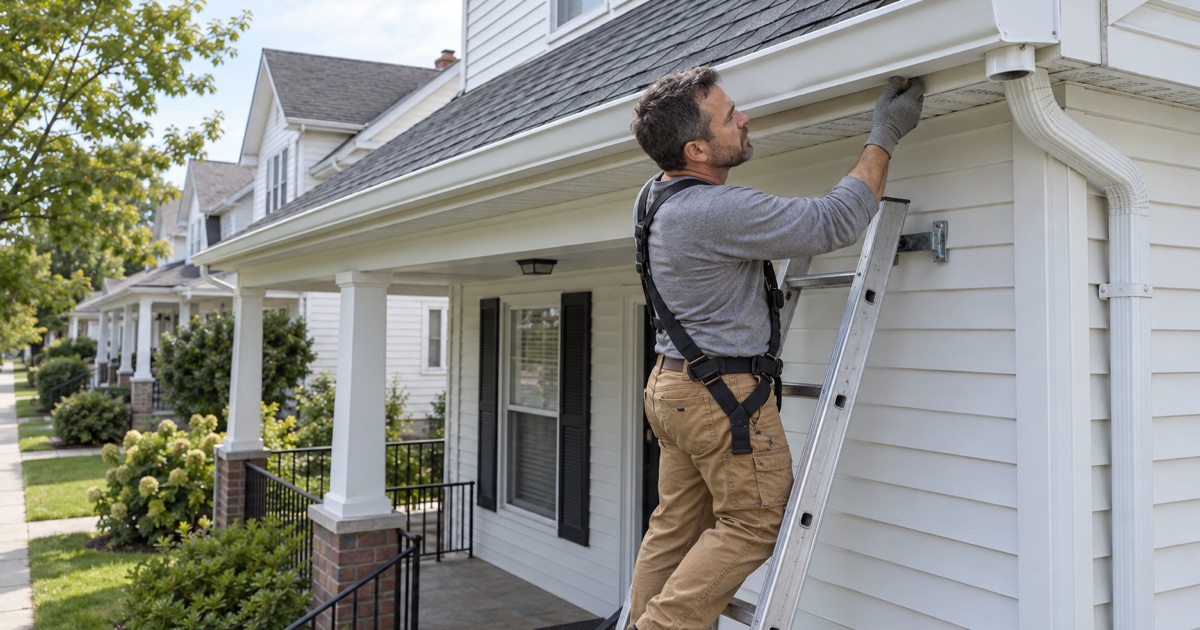
Seamless Aluminum Gutters Formed on Site
Seamless gutters are rolled from a coil of aluminum at the house, so each run is one continuous piece cut to length. Without seams along the run, there are no joints to separate, drip and stain the siding. Corners and end caps are the only seams, and we seal and rivet them so they stay tight.
Aluminum does not rust, holds its color well and is light enough to hang from older fascia without straining it. We offer a range of colors so the gutters can match the trim or blend with the siding.
Sizing Gutters to the Roof Area
Gutter size should come from the roof area draining into each run, the pitch of the roof and how hard it rains, not from what was there before. Many older houses have small gutters that overflow in every heavy rain. We measure each run and recommend 5-inch or 6-inch K-style gutters accordingly.
Steep roofs shed water fast and can shoot it over the front of a gutter at a valley. Where two slopes meet, we may add a larger gutter, a splash guard or an extra downspout so the corner does not overflow.
Pitch and Hanger Spacing
A gutter needs a slight, even slope toward each downspout so water does not sit and freeze. We snap a line along the fascia and set the pitch before hanging anything. Long runs may slope toward downspouts at both ends.
Hidden hangers are fastened into the fascia and rafter tails at close spacing so the gutter can carry snow and ice without pulling away. Spacing them closely matters here, where gutters hold heavy ice through the winter.
Downspouts and Drainage
Downspout Size and Placement
Downspouts limit how fast a gutter can empty. Too few, or downspouts that are too small, and even a large gutter will overflow. We place downspouts to match the roof area on each run and upsize them where a large roof drains to one corner.
We also think about where each downspout comes down. Placing them away from walkways and driveways keeps water and ice from collecting where people walk.
Carrying Water Away From the Foundation
A downspout that empties at the base of the wall sends water straight to the foundation and into the basement. We add extensions or splash blocks to carry water several feet out, and we look at the slope of the ground so the water keeps moving away from the house.
On hillside lots, which are common around Scranton, we look at where the water will travel after it leaves the downspout. Directing it toward a neighbor’s yard or onto a sidewalk only moves the problem.
Underground Drain Connections
Some houses have downspouts connected to underground pipes. Those lines can clog, crack or collapse over time, backing water up into the downspout. We check that existing connections accept water before tying new downspouts into them, and we can redirect downspouts to the surface where a buried line has failed.
Gutters and the Roof Edge
Drip Edge and Gutter Placement
Drip edge is the metal strip along the edge of the roof that guides water off the shingles and into the gutter. Without it, water can wick back under the shingles and run behind the gutter onto the fascia. We install or replace drip edge and set the gutter so the drip edge laps into it.
Gutters hung too low miss the water entirely in heavy rain. Hung too high, they catch sliding snow and ice. We set the height so the gutter catches runoff without becoming a shelf for ice.
Fascia and Soffit Repairs
Rotted fascia boards cannot hold gutter hangers securely. Before installing new gutters, we replace soft or rotted fascia and, where needed, wrap it in aluminum so it does not need painting.
Many Scranton houses were built before 1978, and their fascia and trim may carry lead-based paint. Disturbing that paint falls under the EPA’s lead-safe renovation rule, so we contain the work and clean up the debris properly.
Ice Dams and Gutters
Gutters do not cause ice dams, but they can make them worse when they are clogged or pitched poorly. Ice forms at the eaves when attic heat melts snow higher on the roof. The best defense is an ice barrier at the eaves, good insulation and ventilation, and gutters that drain freely. We do not recommend heat cables as a substitute for fixing the attic, but where an owner wants them, we install gutters that leave room for them.
Gutter Guards and Maintenance
Choosing a Gutter Guard
Gutter guards keep leaves and twigs out of the gutter while letting water through. Screen, micro-mesh and solid-cover designs each handle different debris. Under oak and maple trees, a sturdy guard can greatly reduce how often the gutters need cleaning.
No guard is maintenance-free, though. Small debris collects on top and needs occasional brushing off, and we explain what upkeep each type needs before you choose.
Cleaning and Inspection
Gutters without guards need cleaning at least once or twice a year, more under trees. When we clean gutters we also check the hangers, seams and downspouts and look for signs of water behind the gutter. Every roof job we do ends with the gutters cleaned of shingle granules, nails and debris, so a new roof does not leave clogged gutters behind.
Commercial Gutter Installation
Gutters for Commercial Buildings
Commercial buildings with pitched roofs often need 6-inch or larger gutters and oversized downspouts to handle large roof areas. We install commercial-grade seamless gutters and heavy-duty hangers sized to the load.
On storefronts and multi-unit buildings, downspouts often have to discharge near entrances and sidewalks. We route them to keep water and ice away from where customers and tenants walk, and we use heavier downspout brackets where carts and vehicles pass close to the wall.
Scuppers and Collector Boxes for Flat Roofs
Flat roofs often drain through scuppers in the parapet wall into collector boxes and downspouts. We install and replace scuppers, collector boxes and downspouts, and we flash the scupper into the roof membrane so water leaves the roof without leaking into the wall.
Undersized scuppers and clogged collector boxes let water pond behind the parapet, which puts extra load on the roof and stress on every seam. We size the openings to the roof area they serve and check that each collector box drains freely into its downspout.
Our Step-by-Step Gutter Installation Process
Step 1: Measure the Roof and the Runs
We measure the roof area draining to each side of the house, note the pitch and valleys, and check the condition of the fascia and drip edge. Those measurements decide the gutter size, not the old system.
Step 2: Size and Plan the System
You get a written price for gutter size, downspout count and placement, guards if wanted, and any fascia repairs, each listed separately. Nothing is added once the work starts.
Step 3: Repair the Fascia and Set the Line
Rotted fascia is replaced, the drip edge is checked, and a chalk line sets the pitch toward each downspout. Sound fascia is what holds the hangers through winter ice.
Step 4: Form, Hang and Test
The seamless runs are formed on site, hung with hidden hangers, and tested with water to confirm every section drains to its downspout before we leave. Extensions are set so the water clears the foundation.
- 20+ Years Roofing
- Free Written Estimates
- Repair Before Replace