Scranton Quality Roofing handles chimney flashing repair in Scranton, PA, serving surrounding cities including Dunmore, Moosic, Old Forge, Throop and Dickson City. Chimneys are the single most common leak point we find on older houses, and in more than 20 years of roofing we have learned that the fix is almost always new flashing rather than another layer of roof cement.
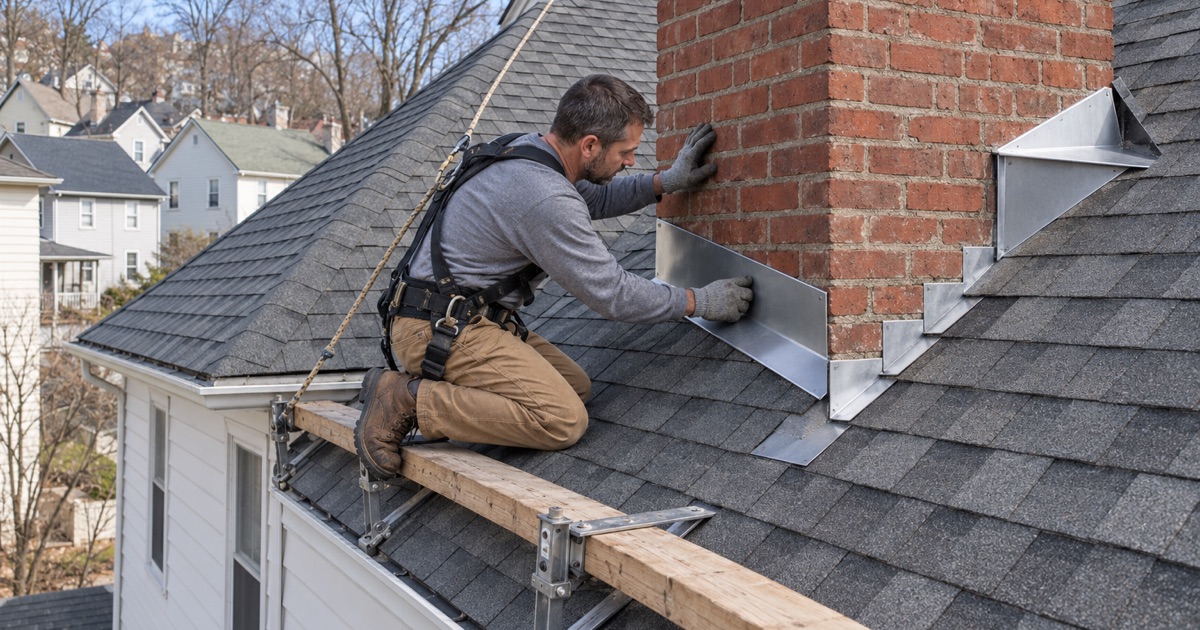
Chimney flashing is a system of several parts working together. Step flashing is woven into each course of shingles along the sides, counter flashing is set into the brick and laps over the step flashing, an apron seals the downhill face, and a cricket protects the uphill side of wide chimneys. When any one of those parts fails, water runs into the attic and down the walls beside the chimney.
We trace a chimney leak from inside the attic before recommending a repair, because damp brick, a cracked crown or a missing cap can look just like a flashing leak. You get a straight answer about which part failed and what it will take to fix it.
The Parts of Chimney Flashing
Step Flashing Along the Sides
Step flashing is a series of L-shaped pieces of metal, one for each course of shingles, that run up both sides of the chimney. Each piece overlaps the one below it and is covered by the next shingle, so water is passed down the roof one step at a time.
On older roofs we often find one long piece of bent metal instead of individual steps, or steps that have rusted through. We replace them with new step flashing installed piece by piece as the shingles go back on.
Counter Flashing and the Reglet
Counter flashing covers the top edge of the step flashing and keeps water from running behind it. The right way to attach it is to cut a groove, called a reglet, into a mortar joint, set the bent edge of the flashing into the groove and seal it.
Counter flashing that is only glued or nailed to the face of the brick pulls away as the chimney and roof move. We grind new reglets where needed and set the counter flashing into them.
Apron Flashing on the Downhill Side
The apron is a single piece of flashing across the front, downhill face of the chimney. It sits on top of the shingles below and turns up the brick behind the counter flashing. A loose or short apron lets water blow under it in wind-driven rain.
Crickets on Wide Chimneys
On the uphill side, a wide chimney acts like a dam. Water, leaves and snow pile up against it and work their way under the flashing. A cricket, or saddle, is a small peaked roof that diverts water and debris around both sides.
We frame and flash crickets on chimneys that need them, covering them with ice barrier and either shingles or metal. Chimneys wider than about 30 inches generally call for one.
Chimney Leaks on Older Scranton Houses
Brick Chimneys and Aging Mortar
More than half of Scranton’s homes were built before 1940, and many still carry their original brick chimneys. Decades of freezing and thawing loosen mortar joints, which lets counter flashing pull out and water soak into the brick.
When the mortar where the counter flashing sits is failing, we tell you, since new flashing needs sound joints to hold. Masonry repair beyond those joints is work for a mason, and we say so when that is what the chimney needs.
Tar-Covered Flashing From Past Repairs
Many chimneys we inspect are covered in layers of roof cement and tar from past repairs. Under it, the original flashing has usually rusted through. Each new layer of tar holds back water for a season before cracking again. We strip the old tar and flashing down to the brick and shingles, then install a complete new flashing system that does not depend on sealant to stay dry.
Chimneys on Slate Roofs
On slate roofs, chimney flashing is often copper or lead and can last a long time, but the slates around the chimney break when people walk near it. We repair chimney flashing on slate roofs carefully, removing and resetting slate with copper nails and slate hooks so the surrounding roof is not damaged.
Chimney Flashing and Roof Replacement
Always New Flashing With a New Roof
When we replace a roof, we replace the step, counter and chimney flashing along with it rather than reusing old metal under new shingles. Old flashing has usually been bent, nailed through and patched, and it often becomes the first leak on an otherwise new roof.
Ice Barrier Around the Chimney
Scranton averages about 45 inches of snow a year, and snow piles up behind chimneys. We install self-adhering ice and water barrier around the chimney and up onto the cricket before the flashing goes on, so meltwater that backs up has a second line of defense.
Removing an Unused Chimney
If a chimney no longer serves a fireplace, furnace or water heater, a roof replacement is a good time to consider taking it down below the roofline and decking over the opening. That removes a leak point for good. We confirm nothing still vents through it before recommending removal.
Related Chimney Problems We Check
Crowns, Caps and Masonry
A cracked chimney crown or a missing cap lets rain into the flue and the brick. Those leaks look like flashing leaks from inside the house. We check the crown and cap during every chimney flashing inspection and tell you when the problem is above the roofline rather than at it.
Attic Signs of Chimney Leaks
In the attic we look for water trails down the chimney chase, stained framing beside the brick and damp insulation. Those signs show which side of the chimney is leaking and how long it has been going on, which helps us repair the right part the first time.
- 20+ Years Roofing
- Free Written Estimates
- Repair Before Replace